
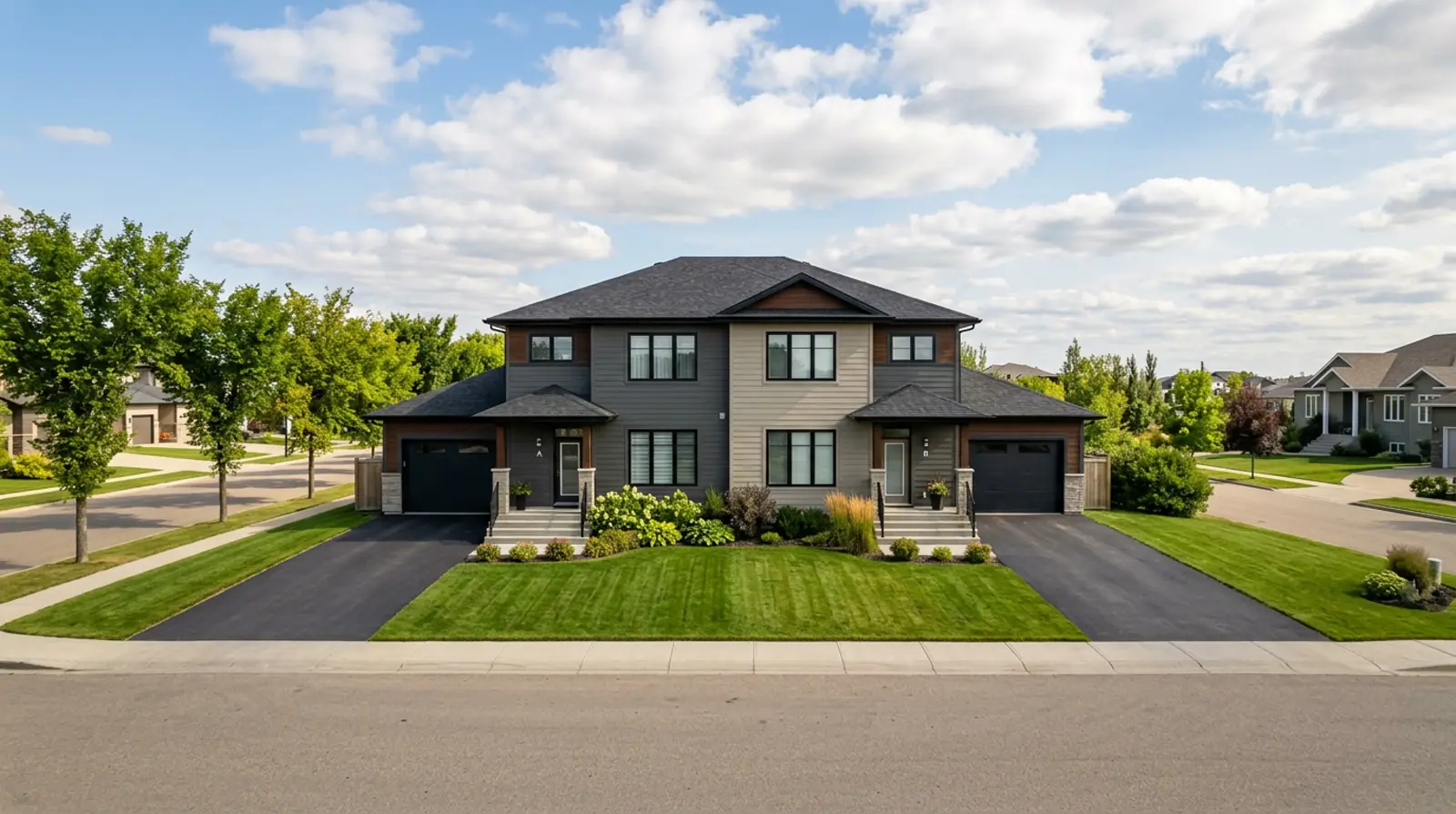
Warman's rental market has quietly become one of the most reliable in the Saskatoon region. Population growth, strong young-family demand and limited purpose-built rental supply keep vacancy low, and investor-friendly financing options are still available. Our CENTURY 21 Fusion Warman team walks through this segment regularly, and here is exactly what to look at before you write your first offer.
Talk To A Warman Investment Agent →
What Actually Rents Well In Warman
The strongest rental performers in Warman are three-bedroom detached homes with a garage and a fenced yard, followed by newer townhomes and legal secondary suites. These property types match what local renters actively search for: family space, storage, parking, and a yard. Older bungalows can pencil out too, but expect softer rents unless the basement is developed and permitted for use. Small condo units tend to have thinner margins here compared to Saskatoon.
Run The Numbers Honestly Before You Offer
A quick rule of thumb is that a Warman rental should carry itself with 20 to 25 percent down, current mortgage rates, all realistic expenses (taxes, insurance, maintenance reserve, vacancy allowance, property management if used) and today's achievable market rent. If you have to lean on optimistic rents or ignore maintenance to make it work, the deal is not there. We can help you build a real spreadsheet before you commit.
Financing And Down Payment Realities
Most rental purchases in Warman require 20 percent down as a minimum, and lenders will underwrite the property on its own rental income plus your personal capacity. Rates on rental mortgages are typically slightly higher than owner-occupied. A pre-approval that specifically confirms rental purchase capacity is essential; a standard pre-approval for your own home is not the same thing.
Talk To A Warman Investment Agent →
Secondary Suites, Permits And Insurance
A legal secondary suite in Warman can meaningfully improve cash flow, but a suite is only worth what the city and your insurer say it is. Confirm the suite is permitted, has proper egress, meets fire separation requirements, and that your policy explicitly covers a two-unit rental. An unpermitted suite is a liability, not an asset, and can void insurance if a claim arises.
The Landlord Side: Tenant Screening And Management
The best Warman rentals are ruined by weak tenant screening and rescued by strong ones. Credit check, employment verification, reference calls to prior landlords, and a written lease that follows the Saskatchewan Residential Tenancies Act are non-negotiable. Decide up front whether you will self-manage or hire a property manager. Both work, but the honest cost of self-managing is time, and the honest cost of a manager is 8 to 12 percent of rents. Bake it into your numbers.
The Bottom Line
Warman is one of Saskatchewan's fastest-growing communities, and every family's situation is a little different. If you want a walk-through of what today's numbers mean for your specific plans, the CENTURY 21 Fusion Warman team is here to help.
Talk To A Warman Investment Agent →
Neighbourhood and market notes reflect current CENTURY 21 Fusion Warman experience on the ground and public MLS activity. Please contact us for a personalized market opinion for your street or property type.
Related Links
- Search All Warman MLS Listings – browse every active listing in Warman and the surrounding area.
- Warman Recently Sold Homes – see what has actually been selling in Warman lately.
- Free Warman Home Evaluation – find out what your Warman home is worth in today's market.
- Warman Real Estate Market Trends 2026 – benchmark prices, inventory and days on market in Warman right now.
- Warman Home Staging Guide – the pre-listing prep that actually drives stronger offers.
- Selling Your Warman Home in Spring – the spring seller playbook we use here.
FAQs
Is a rental property in Warman a good investment in 2026?
For the right property with proper due diligence, yes. Low vacancy, strong family-rental demand and continued population growth all support Warman as a rental market. The wrong property, or one bought on optimistic assumptions, is still a bad investment anywhere.
How much down payment do I need?
Most rental purchases in Saskatchewan require a minimum 20 percent down. Some buyers put more down to improve cash flow. Talk to a mortgage broker experienced with rental files early in the process.
Can I rent out the basement of my Warman home?
You can, but the suite should be legal: permitted with the city, with proper egress, fire separation and building code compliance. Confirm your insurer covers the two-unit use. An unpermitted suite is a real risk.
Should I self-manage or use a property manager?
Both work. Self-managing saves 8 to 12 percent of rents but costs your time and requires you to know landlord obligations. A property manager is worth it for busy owners, out-of-town owners, or anyone with more than one door.
Enjoy this blog post? Click here to subscribe for updates
Leave A Comment